Built for contracts
Your futures are recorded as contracts and valued the way they actually move.
A futures journal that treats your contracts as futures. Astro Trade gets the contract math right, syncs from your broker, and breaks performance down by contract, setup, and direction.
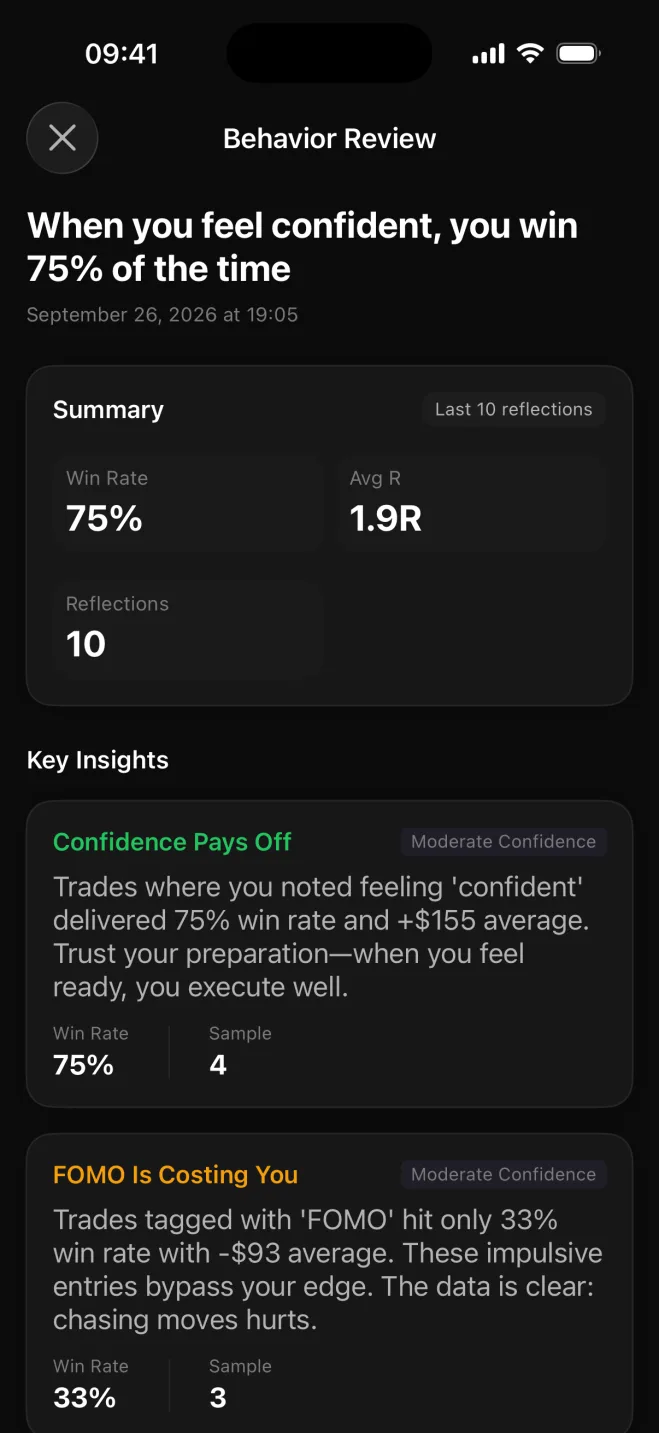
Plenty of journals were built for stocks and bolt futures on afterward, so an ES or NQ contract ends up sized and valued like a share. Astro Trade was built to handle your instruments the way they really trade, including point values and tick-based contracts, so a futures position behaves like the contract it is.
Different contracts move differently, and that is exactly where generic tools get your numbers wrong. Astro Trade keeps each trade's contract details with it, so your profit and loss reflects how that instrument actually moves rather than a rough estimate.
Set the value of a move yourself when you know it, or let Astro Trade work it out from the contract's tick value and tick size, whichever you have to hand.
Connect MetaTrader 5 or TradeLocker and your futures trades land in the journal automatically, so you spend your time reviewing instead of re-entering fills.
Every trade comes in as contracts with its point value, direction, and size, and its result is kept in the currency it settled in, so totals stay honest even across products that settle in different currencies.
Break performance down by contract, direction, setup, and playbook to see which products you trade best: whether the index futures suit you better than energy, how ES compares with NQ or CL, and whether your shorts do as well as your longs.
Tag the setups you trade, collect them into playbooks, and add a short note when a session in a contract is worth remembering.
Your futures are recorded as contracts and valued the way they actually move.
Set the value of a move yourself, or let Astro Trade work it out from tick value and tick size.
Connect MetaTrader 5 or TradeLocker to bring trades in automatically.
Exchange-traded futures and futures CFDs are kept distinct, so neither is mislabeled as the other.
Break performance down by symbol, direction, setup, and playbook.
Each trade keeps its own currency, and a reporting currency rolls totals up consistently.
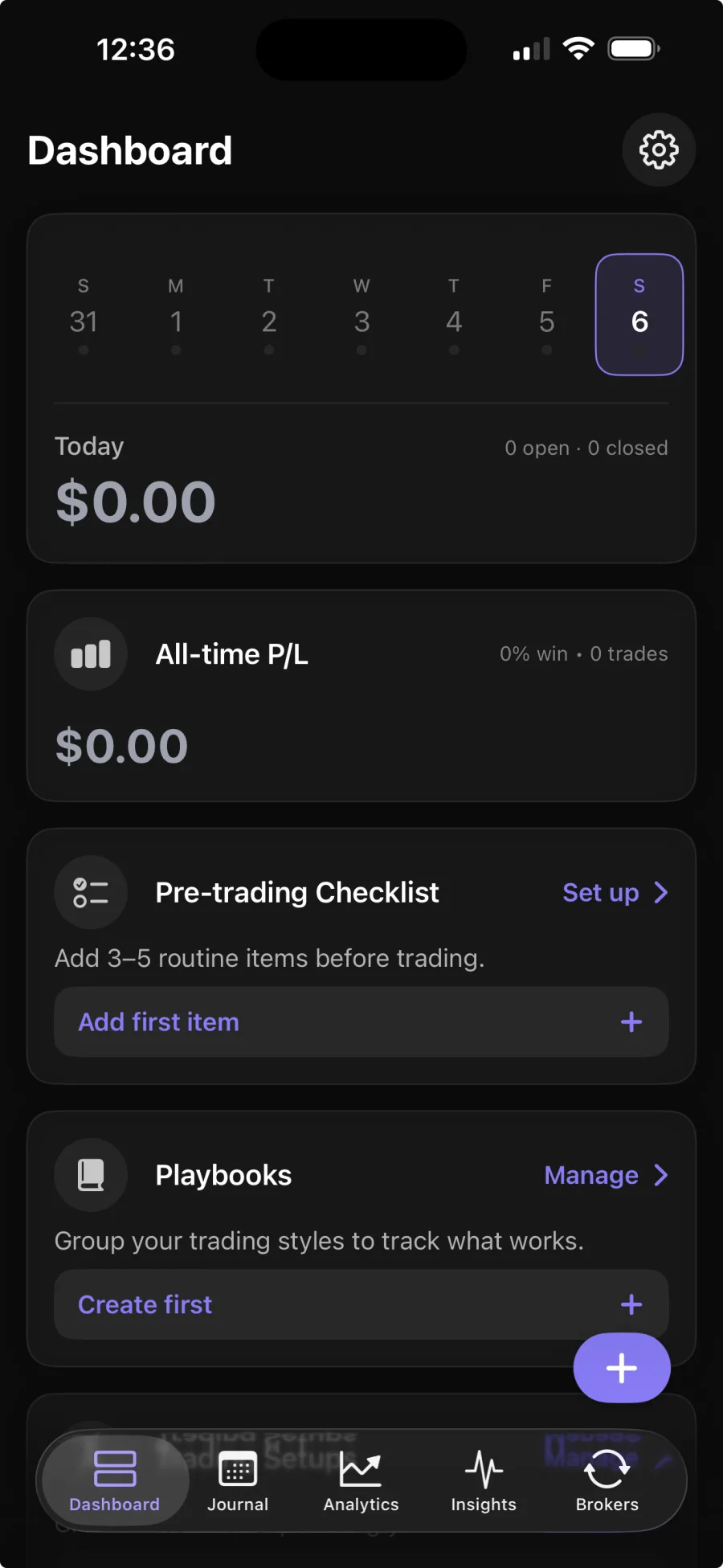
The same futures journal runs on web and iOS, one account and the same trades, so a contract you reviewed at the desk is right there on your phone afterward.
Yes. Astro Trade is built to handle futures as their own instrument, recording each trade as contracts and valuing it the way the contract actually moves, alongside stocks, forex, crypto, and CFDs.
Yes. Each trade keeps its contract details, so your profit and loss reflects how that instrument moves. You can set the value of a move yourself, or let Astro Trade work it out from tick value and tick size.
Connect a supported broker, such as MetaTrader 5 or TradeLocker (Interactive Brokers is coming soon), and your trades sync in automatically. Broker sync is part of Premium; the core journal is free.
Yes. The two are recorded distinctly rather than merged, so a futures CFD is never mislabeled as an exchange-traded future.
Yes. The web and iOS apps share one account and the same trades, so your contracts, setups, and notes show up in both.